
 Beyond Membership: What State Osteopathic Associations Are Learning Together
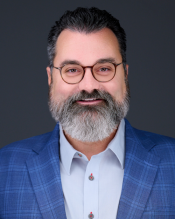
Matthew Helms, CAE, AOMA Executive Director
Over the past year, I have had the opportunity to participate in, and help facilitate, a series of conversations with my colleagues in the Association of Osteopathic State Executive Directors (AOSED). What began as bi-weekly working-group discussions about the challenges facing our individual state associations gradually developed into a much broader conversation: What does a successful state osteopathic association need to look like in the years ahead?
It is an important question for AOMA, but Arizona is certainly not alone in asking it.
Across the country, state osteopathic associations are experiencing many of the same pressures. Paid membership has declined in many states. Our membership is aging, while converting students and younger physicians into long-term members has become increasingly difficult. Perhaps more importantly, retention has become as significant a challenge as recruitment. Physicians have more choices competing for increasingly limited time and professional dollars, making association dues something many now evaluate as discretionary rather than automatic.
That led our AOSED working group to an important realization: membership decline is not simply a membership problem.
There probably isn’t a new dues category, marketing campaign or clever recruitment promotion that, by itself, reverses the trend. Instead, this is an adaptive challenge requiring us to reconsider what physicians need from their professional organizations and how state associations can deliver that value.
Looking Beyond Our Own States
One of the benefits of AOSED is the ability to compare experiences across state lines. Over the past year, our discussions have examined membership and retention, non-dues revenue, conferences and CME, advocacy, student and resident engagement, leadership development, organizational capacity and the relationship between state affiliates and the American Osteopathic Association.
Some patterns are becoming clear.
The traditional association business model is under pressure. Membership dues alone are increasingly insufficient to sustain operations, while the economics of conferences have changed as travel, facilities, audiovisual services, food and staffing costs have increased. State associations are consequently exploring sponsorships, corporate partnerships, foundations, alternative educational formats and other sources of non-dues revenue.
Our research also demonstrated just how central education remains to state organizations. In an AOSED non-dues revenue survey, all responding associations reported providing CME, although the number and format of programs varied considerably. That diversity itself raises an interesting question: rather than assuming that the conference models of the past must continue indefinitely, how can we deliver education in ways that better reflect how physicians actually want to learn today?
Our working-group conversations increasingly returned to a simple concept: online for education; in person for experiences. Lectures and traditional didactic education may increasingly work online or on demand, while valuable face-to-face experiences may center more heavily on hands-on training, OMM, ultrasound and POCUS, networking and advocacy.
That does not necessarily mean abandoning traditional meetings. It means being willing to ask what each format does best.
From Comparing Problems to Exploring Possibilities
Those months of discussion and research culminated in an AOSED strategic discussion in Chicago on July 15. Rather than conducting another traditional meeting filled with reports, we intentionally designed the afternoon around conversation.
Participants considered the AOA’s developing strategic priorities and then worked in rotating groups to explore four areas: supporting the physician career journey, communicating value, research and leadership. We asked what success would look like at the state level, what assets and relationships state associations uniquely bring to the table, and what realistic actions affiliates could take within their existing capacity and influence.
That distinction matters.
The question was not simply, “What should the AOA do for us?” Nor was it, “How do we preserve everything state associations currently do?”
Instead, we asked harder questions: Where are state associations indispensable? What should we be doing differently? What can we stop doing? What can we accomplish together that would be difficult for any one state to accomplish alone?
Before the meeting, participants were even asked to consider what members would miss most if their state association disappeared tomorrow, and, conversely, what activities consume significant resources but may no longer provide meaningful member value.
Those are uncomfortable questions for any organization. They are also exactly the questions healthy organizations should be willing to ask.
Where State Associations Still Have an Important Advantage
One theme emerging from the conversations is that state associations possess something difficult to replicate nationally: proximity.
We know our state legislatures and regulatory environments. We have relationships with medical schools, residency programs, licensing boards, healthcare institutions and physician leaders. We can connect students with physicians and physicians with one another. And we can identify challenges facing physicians locally before they necessarily become national issues.
Advocacy, in particular, continues to emerge as one of the clearest examples of tangible state association value. Across states, legislative engagement, regulatory representation, student participation and lobbying remain areas where associations can demonstrate an impact that physicians can see and understand.
But our discussions suggest that proximity could be used for much more.
State associations could become important partners in developing physician leaders, not only association board members, but physicians prepared to lead within hospitals and health systems and physicians equipped to advocate effectively with policymakers. The strategic discussions explored leadership development across three broad tracks: organizational/board leadership, professional leadership and political advocacy leadership.
We also explored better ways of maintaining relationships with students and residents as they move through medical school, residency and eventually practice. Participants discussed shared tools, stronger relationships with colleges of osteopathic medicine, better data, mentorship, research opportunities and mechanisms for keeping physicians connected to the osteopathic community throughout their careers.
Collaboration May Be Part of the Answer
Perhaps the most encouraging part of this work has been recognizing that every state does not need to invent every solution independently.
State associations repeatedly identified opportunities to share resources, program templates, leadership curricula, research models, advocacy tools and best practices. A national resource library or stronger collaboration platform could allow an effective idea developed in Arizona, Ohio, Florida or another state to be adapted rather than recreated from scratch.
There is also growing recognition that we need better data. Our discussions have emphasized research into membership value, engagement drivers, association relevance and sustainable operating models. The goal is straightforward: make fewer decisions based on assumptions and more decisions based on evidence.
That work is continuing.
What This Means for AOMA
For AOMA members, I think the most important takeaway is that the conversations we are having in Arizona are part of a much larger discussion occurring throughout the osteopathic profession.
How do we remain relevant to physicians whose professional lives look very different from those of physicians 10-20 years ago? How do we support physicians who increasingly practice as employees of large healthcare organizations? How do we help students and residents develop a lasting connection to the osteopathic profession? How do we strengthen physician leadership? How should CME evolve? And how do we ensure that the resources entrusted to our associations are invested in activities that produce meaningful value?
The AOSED work has not produced a neat list of answers, and I don’t think that should be the expectation.
What it has produced is a better set of questions, a willingness among state associations to learn from one another, and a growing recognition that preserving our organizations is not the same thing as preserving every program or business model we have inherited.
The emerging priorities are increasingly clear: rebuild membership value, diversify revenue, strengthen the capacity of state organizations, improve alignment between state and national organizations, and use better data to guide decisions.
For AOMA, participating in that conversation gives us an opportunity not only to learn from what is happening elsewhere, but also to contribute what we are learning here in Arizona.
Our goal should not simply be to convince more physicians that they need an association. Our challenge is to build an association that physicians would notice if it were gone.
That is a much higher standard… and a much more worthwhile one.